
Where Old Michigan Records Live
No single public database holds old Michigan mugshots. Local law-enforcement offices keep records under approved schedules. The Archives of Michigan preserves selected public records with lasting value. A booking photo might still survive somewhere. It might sit in a county jail inmate jacket, on an arrest card, or inside a prison record series. Then again, it may have been destroyed under schedule. Or it was simply never transferred to the state.
Different record types answer different questions. A jail control log proves a person was booked there. An inmate jacket can hold an intake record, booking card, photo, classification, release papers, or a warrant. A court file may show charges and outcomes without holding the jail's photo. One more wrinkle matters here. An online copy can outlast the government's own record. An archived file may need to be found by institution, record series, or date rather than by name.
Name the likely custodian and the record type first. A historic prison photograph is a different hunt. It does not resemble a request for a county booking log or an old court case file. County, facility, full name, known alias, and a likely period will narrow things even without an exact booking date or case number. Ask the office up front whether it still holds the series. Or ask whether the material went to an archive.
Michigan Jail Record Retention
Michigan General Schedule 11 assigns different retention periods to different jail record groups. The current schedule sets out those terms. Under "calendar year plus," the listed years begin after the year the record was created.
| Schedule item | Record group | Retention |
|---|---|---|
| 11.200 | Jail booking and control logs | Calendar year plus seven years |
| 11.202 | Daily count summaries | Calendar year plus one year |
| 11.205 | Housing reports | Calendar year plus one year |
| 11.210 | Jail inmate jackets, which may include intake records, booking cards, mugshots, classification, sentencing, release, arrest cards, and warrants | Until release plus ten years, then destroy |
| 11.218 | Monthly JPIS reports with statewide county-jail counts, crime categories, release, and sentencing data | Calendar year plus two years |
| 11.219 | Midnight counts, including admissions, releases, male/female, sentenced/unsentenced, and related reporting | Calendar year plus two years |
| 11.028 | Juvenile apprehension records, which may include photographs and fingerprints | Until the juvenile turns 21, then destroy, subject to holds |
These periods cover record series as a whole. They do not promise that any one person's photo survives. A legal hold, a court order, historical value, or an agency's own approved schedule can change a file's fate.
Note: The schedule controls agency records; it does not remove a copy already held by a newspaper or private website.
Michigan Archive Collections
The Archives of Michigan preserves state history. It keeps records, maps, photographs, film, and other pieces of that past. Its collections catalog and county guides are the natural starting points. The guide collection spans all 83 counties. Record types and date ranges differ by place. The county guide page shows how local records are grouped and searched.
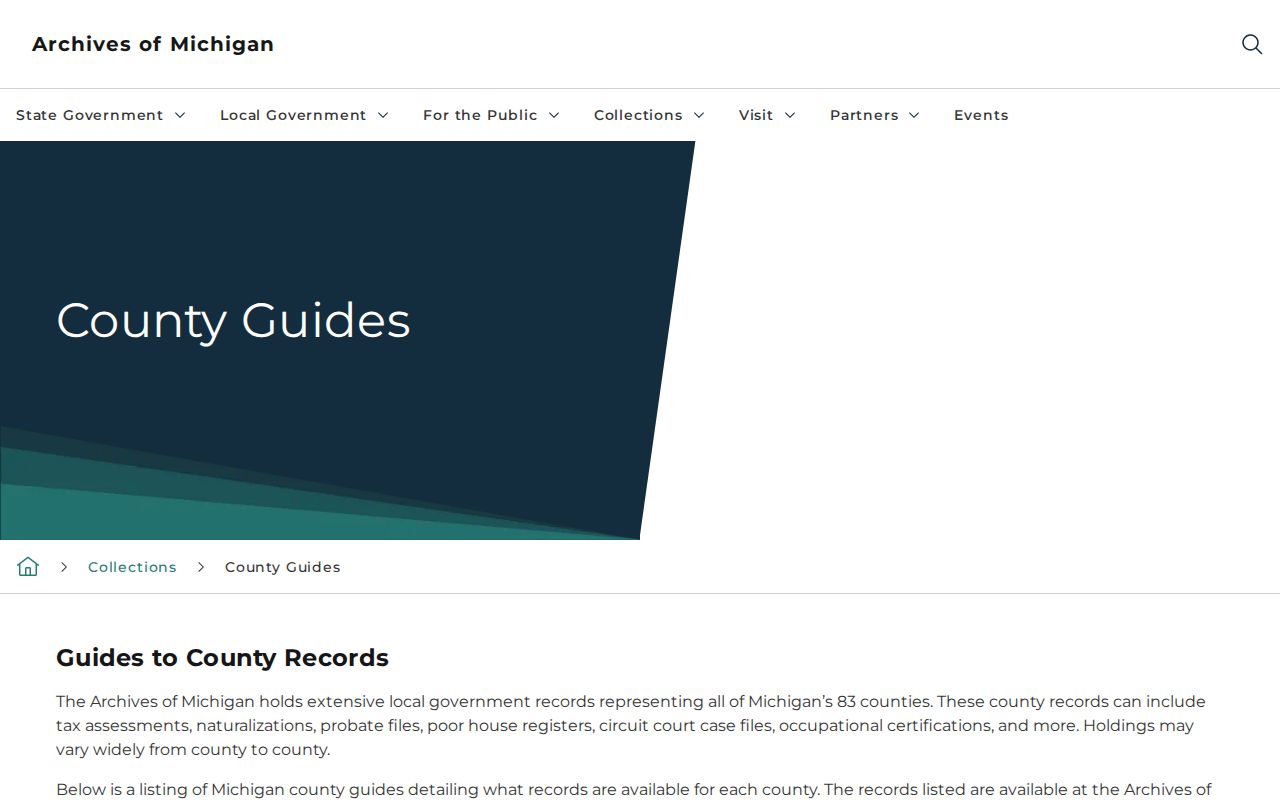
A county guide is a finding aid. It is not a statewide mugshot list. It can point toward court, jail, or local-government record series. But it cannot confirm a booking photo was kept. Guides may cover probate files and naturalizations. They may also list poor-house records, circuit-court case files, tax assessments, and other county material. Holdings vary widely, and most will not serve as a name-search for every arrest.
| Collection or record | Where it may be held | Era covered | How to access |
|---|---|---|---|
| County government records | Archives of Michigan, by county and record series | Varies by county and series | Search the county guide and catalog |
| Prison registers, inmate files, photographs, and institution records | Archives of Michigan, arranged by agency, facility, series, or date | Depends on the collection | Search the catalog, then ask the reading room |
| Prison and reformatory periodicals | Library of Michigan | Varies by title and surviving issue | Check the periodicals collection |
| Current county booking or inmate file | County sheriff or other law-enforcement custodian | Controlled by the agency schedule | Ask the custodian or submit FOIA |
Corrections and prison materials offer no guarantees. They do not ensure a digitized photo or a name-based index. A record is often cataloged under its creator. The entry lists the institution or series that made it. That means a facility name plus a date range can beat a broad person search. The catalog entry for a preserved item also names the source type. It may say register, photograph, inmate file, or institutional report. That saves effort before any visit or copy request.
Requesting Michigan Archive Records
The Archives' visit and reading-room page points researchers to the catalog first. County guides come next. Contact the reading room when a collection is hard to pin down. Copy charges may apply. The page lays out the full research and request route.
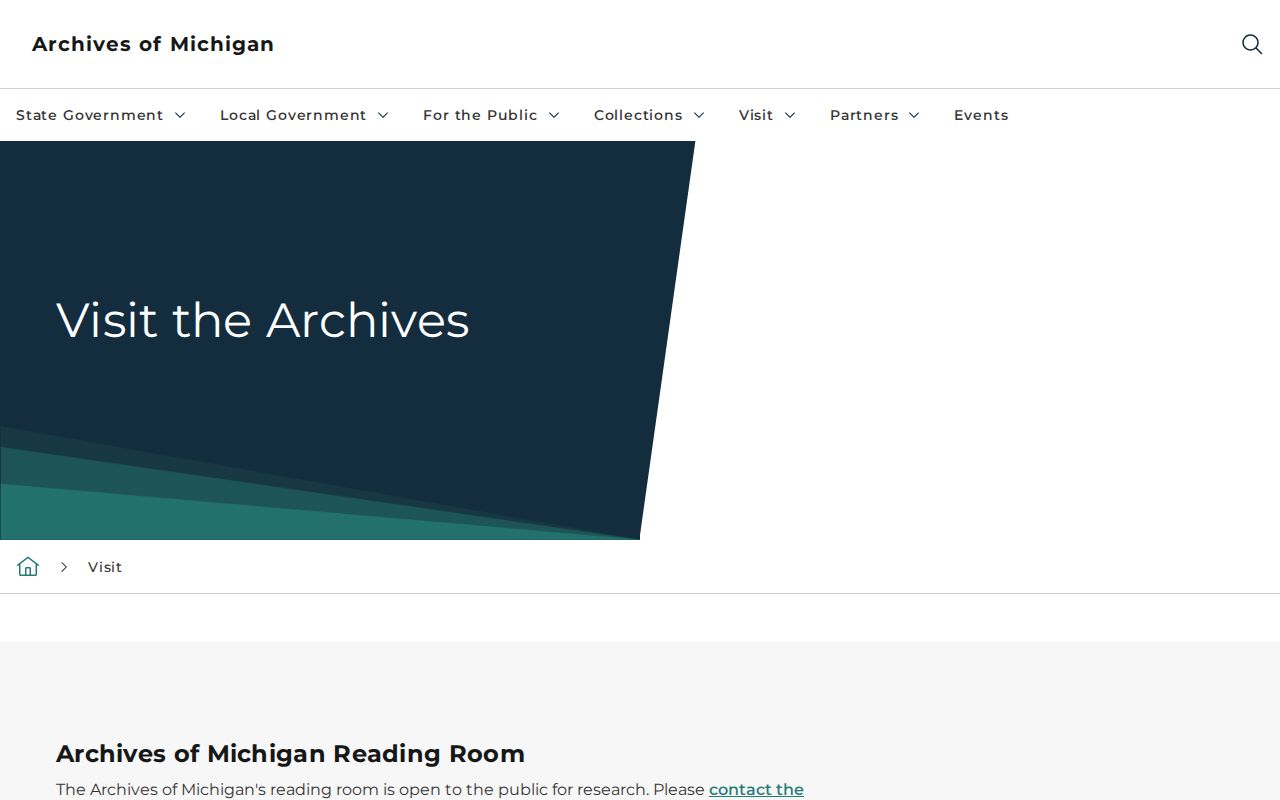
Give the archivist enough detail to identify the series. Then ask whether it is open, fragile, restricted, or available for reproduction. No single fee or response time fits every collection. Include the facility and date range when known. State whether the goal is an inmate register, identification record, photograph, or another record type. Have the reading room confirm the collection and access terms before you plan a visit or copy order; for a focused request, follow these steps:
- Name the likely custodian: a county sheriff, city police agency, Michigan State Police, MDOC institution, or a named prison.
- Search the Archives catalog and county guide using the institution, record series, and date range as well as the person’s name.
- Ask whether the series includes inmate registers, photographs, identification files, admission books, or other correctional records for that period.
- Request access or a copy, giving the legal name or known alias, facility, approximate dates, and the exact record type sought. Ask about restrictions or fragile items.
- If the current agency still holds the record, send that agency a separate FOIA request. An Archives inquiry is not a FOIA request to the agency.
Include a case number if one is known. A missing number should not delay a catalog search. Ask the Archives about current copy costs and access terms before expecting a scan or a visit.
Note: An Archives request and a request to a current police or corrections agency go to different custodians.
Michigan Prison and Arrest Records
How far back do Michigan prison records run? The Department of Corrections says its computer files reach only to about 1980. Anything older goes to the Archives of Michigan. That boundary reflects the database, not the paper trail. Older registers and institutional files may sit in cataloged collections waiting to be found. A search beats any assumption.
Arrest cards are a separate system, too. Act 289 of 1925 placed identification and record duties with the Michigan State Police, covering arrest-card and biometric records.
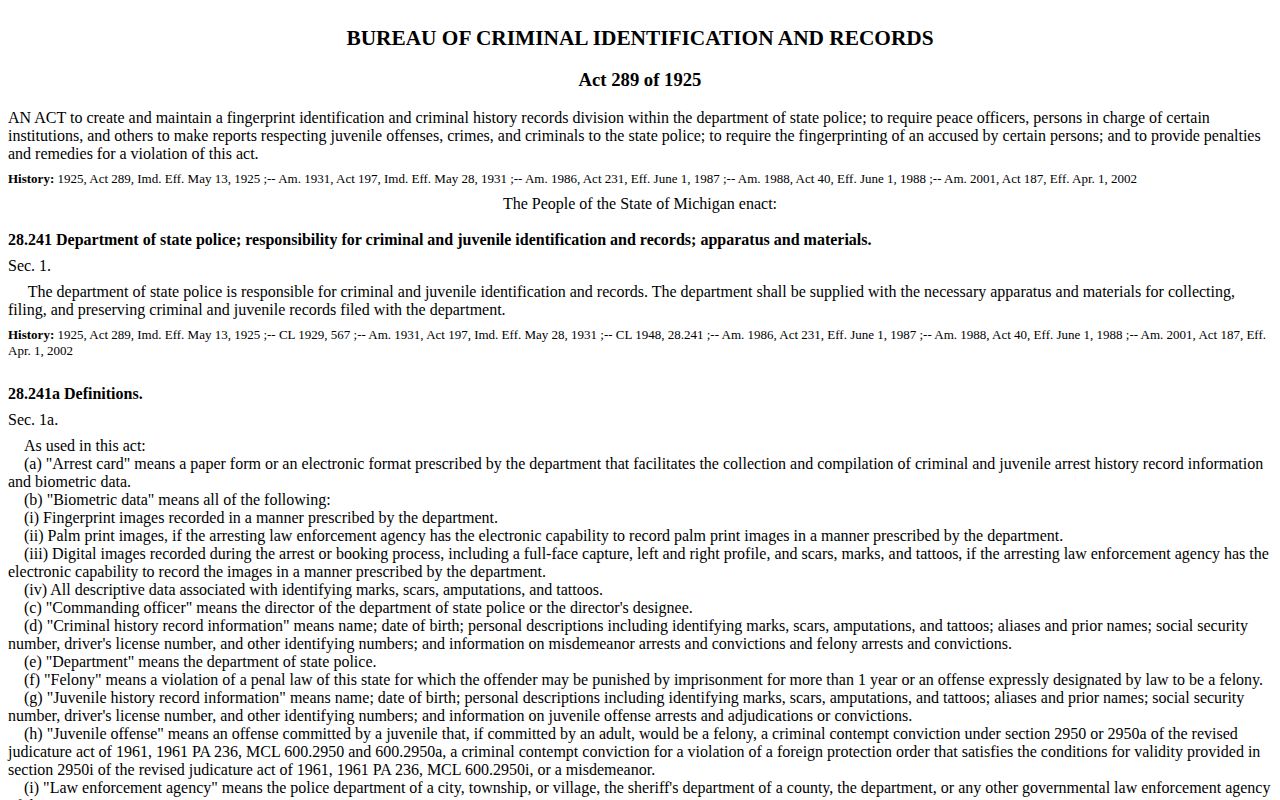
That framework identifies the file type. It cannot promise a historic photo still sits in agency hands. Ask the current agency about newer files. For older paper series, search the Archives.
The MDOC FAQ sets that rough computer-record boundary. Pre-1980 lookups may need a facility name, a record series, and a time period rather than a modern offender search.
Michigan Court Case Records
MiCOURT Case Search offers the official case lookup. It is not a statewide booking-photo archive. A docket can confirm a case number, a charge, or the final disposition before you file a records request. The site itself warns that available data varies by court and case type.
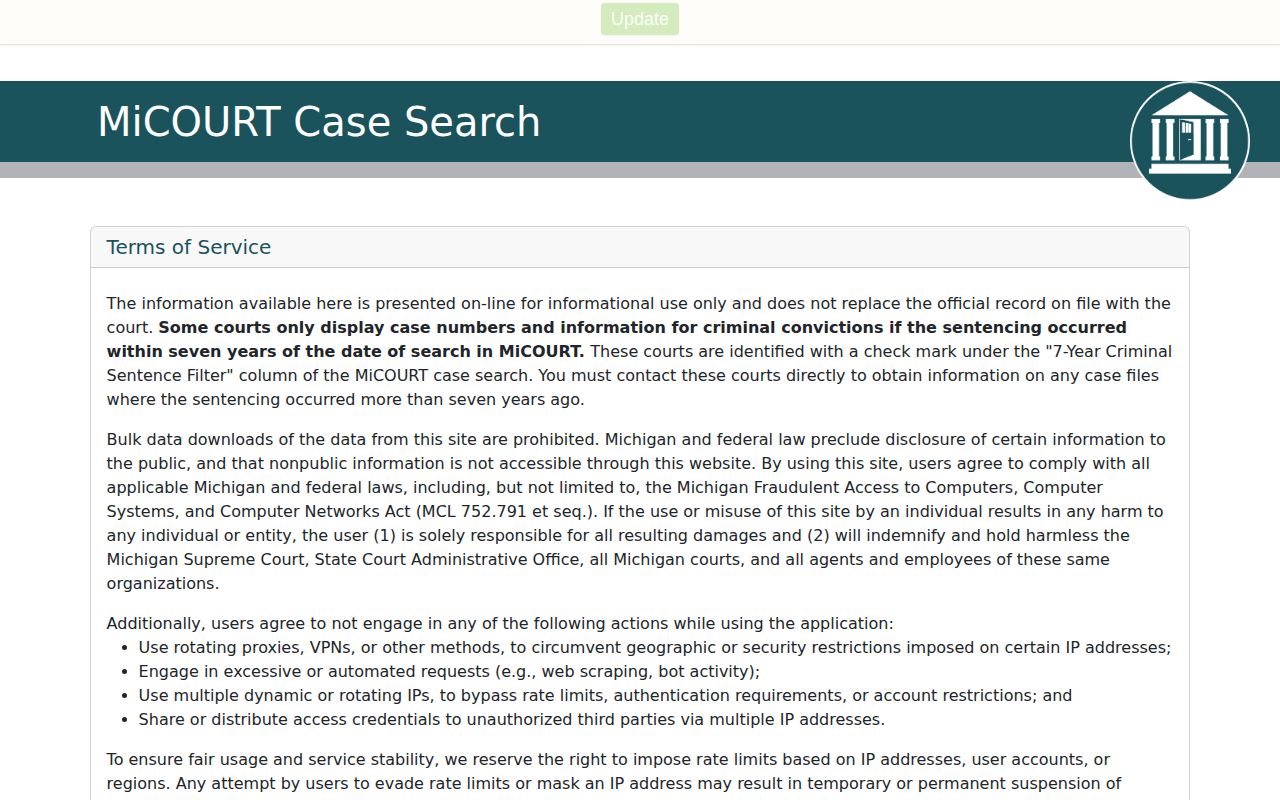
MiCOURT's notice says some courts show conviction data only. That display covers sentencing within a seven-year search period. That window measures the search, not the age of every court record. If an older case is missing, contact the court that heard it. The Michigan Courts access guidance places judicial records under court rules and privacy limits. FOIA does not govern them.
A court file shows the outcome. The booking card or photo belongs with the jail or the arresting agency instead. These are linked pieces of one trail. No single statewide file holds them all.
Michigan Secondary Mugshot Indexes
Official catalogs, county guides, courts, and agencies come first. After that, a private historical index can sometimes point toward a name or county page. Mugshots.com's Michigan index offers county navigation plus date and count markers, though those can change. It remains a secondary source, not state custody.
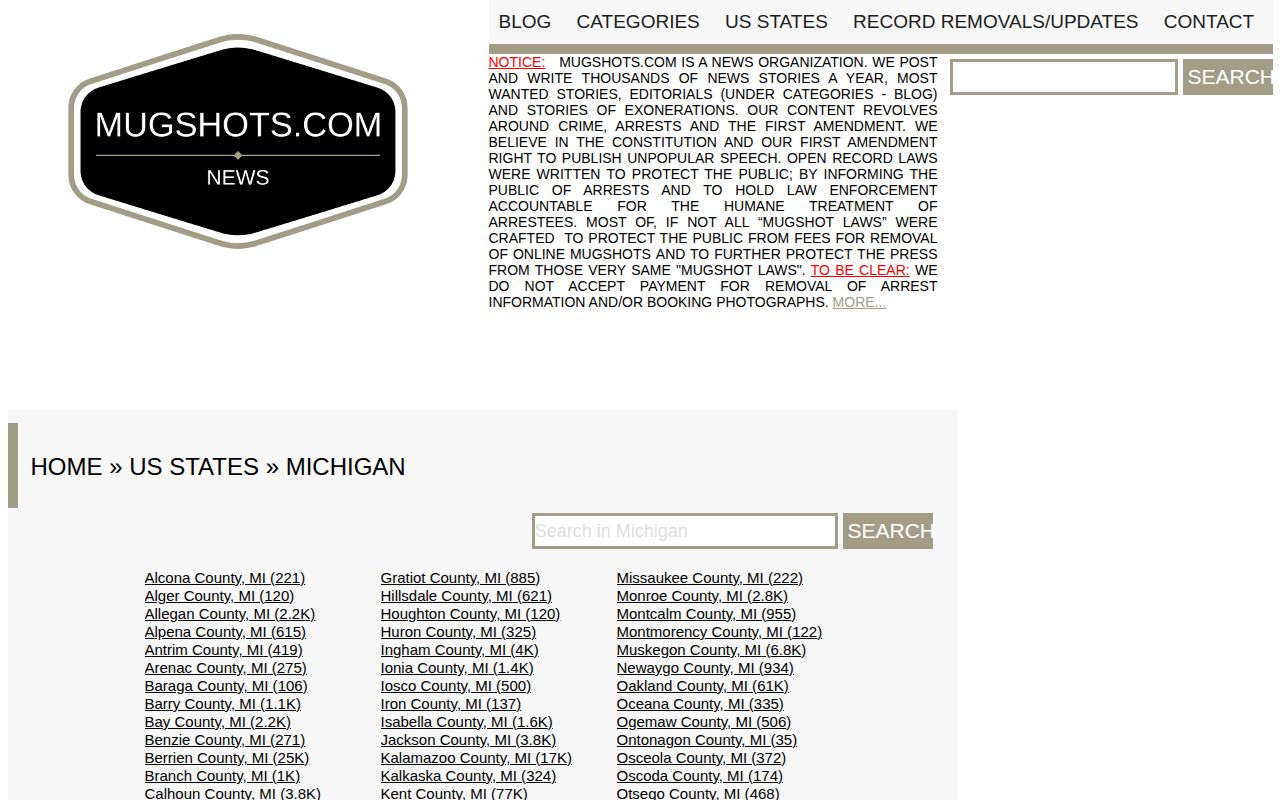
A lead is still just a lead. Verify any name or county with the court or the records custodian. A link or a count proves nothing about coverage, current custody, or whether a photo survives in a government file. No private page substitutes for the original record.
What Michigan Old Records Survive
Retention schedules guarantee very little. A file may never have been created, kept, or transferred to an archive. A surviving collection can be restricted or fragile. Some materials open only in a reading room. A private copy can even linger online after the agency destroys the source record under its schedule.
For current bookings, start with the Michigan County Directory and the statewide records overview. Older records need the right custodian. Ask the Archives catalog or the holding court about access before assuming any image exists.
Note: A historic arrest record may survive without a photo, and an old photo may survive without a complete case file.